
BPC “Wolverine” + KPV: What This Research Stack Is Studied For
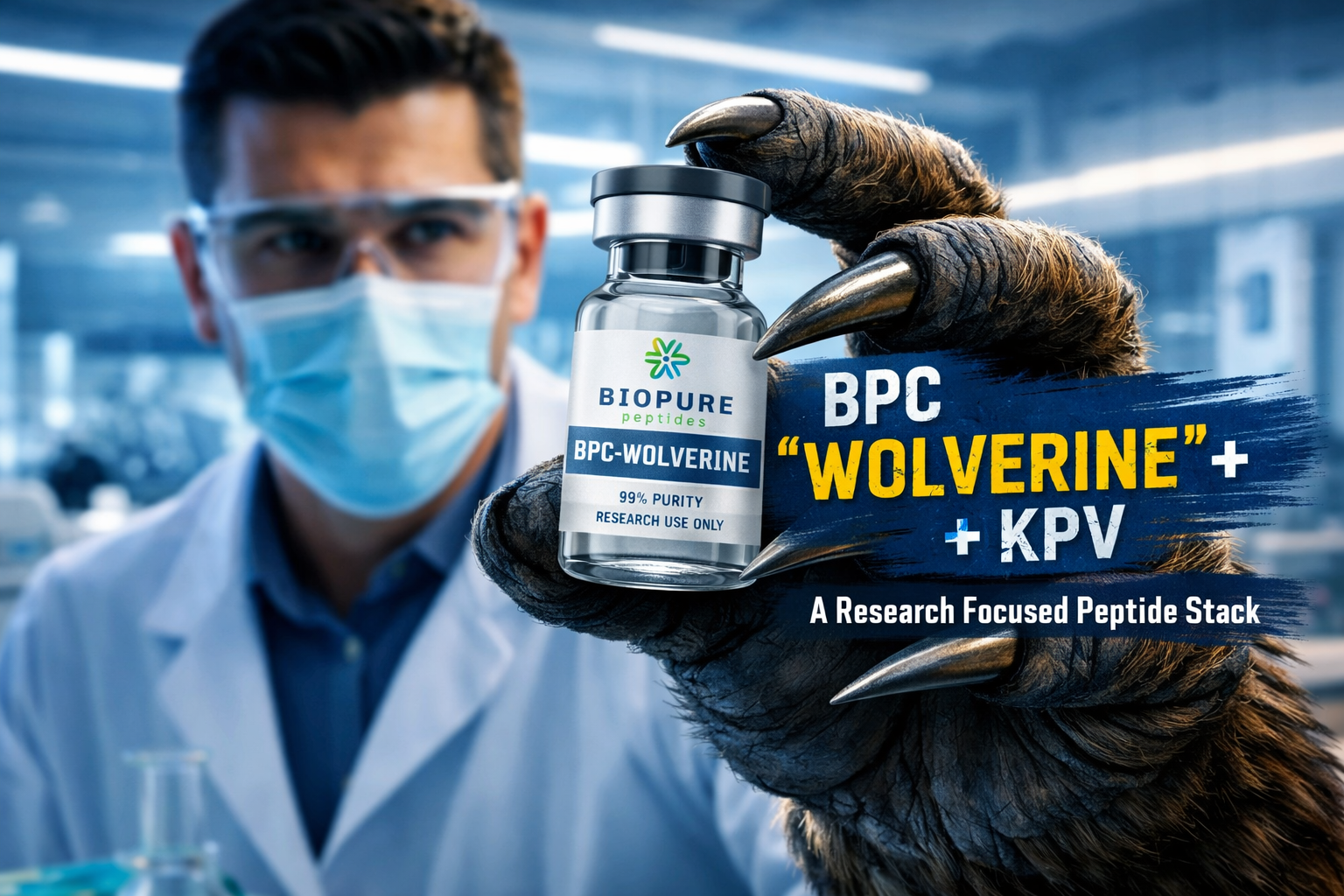
In peptide research discussions, the term “BPC Wolverine” is often used to describe BPC-157 being studied in aggressive tissue recovery models. The nickname comes from the idea of rapid recovery — similar to the fictional character — and over time, it has become shorthand for research focused on connective tissue, soft tissue, and structural support signaling.
When researchers pair BPC Wolverine with KPV, the focus typically shifts to studying recovery signaling alongside inflammation-related pathways. In simple terms, laboratories are interested in observing how tissues behave when both repair signals and a calmer cellular environment are evaluated together.
This is why the BPC Wolverine + KPV combination has become a commonly discussed research stack.
Understanding the Role of BPC “Wolverine” in Research
BPC-157 has been studied across a wide range of tissue models, particularly those involving connective tissue and structural recovery signaling. Researchers often evaluate how this peptide interacts with:
- Tendon and ligament models
- Muscle tissue signaling
- Joint support environments
- Surface tissue research
- Gastrointestinal lining studies
- Blood vessel formation pathways
Because of this broad research interest, BPC-157 earned the “Wolverine” nickname — referring to its frequent use in rapid recovery-focused research environments.
Rather than targeting a single tissue type, BPC Wolverine is commonly studied for how it may influence overall tissue response and structural signaling across multiple systems.
Where KPV Fits Into the Research
KPV is a smaller peptide fragment that is often studied in inflammation-related pathways and tissue environment research. In laboratory settings, researchers frequently explore KPV in models involving:
- Skin tissue environments
- Gut lining research
- Cellular stress response signaling
- Surface tissue recovery models
- Immune-related pathways
Because of this, KPV is often examined for how it may influence tissue conditions during recovery-focused studies.
Why Researchers Pair BPC Wolverine With KPV
When these two peptides are studied together, researchers are typically interested in observing how tissues respond when recovery signaling and inflammation-related pathways are evaluated at the same time.
The idea behind this research pairing is straightforward:
- BPC Wolverine is studied for tissue recovery signaling
- KPV is studied for cellular environment and inflammation-related pathways
- Together, researchers evaluate coordinated tissue response models
This pairing is commonly explored in research environments where tissue stress, structural support, and cellular signaling are being evaluated together.
Common Research Interest Around BPC Wolverine + KPV
In laboratory settings, this stack is often discussed in relation to models involving connective tissue and structural support. Researchers may evaluate how tissues respond in:
- Tendon and ligament research environments
- Joint support signaling models
- Soft tissue recovery studies
- Surface tissue research
- Gastrointestinal lining models
- Cellular migration signaling studies
Because both peptides are frequently studied in soft tissue and structural environments, they are often paired when researchers want to evaluate broader tissue response.
The “Wolverine” Reputation
The “Wolverine” nickname largely comes from how BPC-157 is studied in aggressive recovery-focused models, particularly involving connective tissue. When paired with KPV, the research focus often becomes evaluating how tissues respond when recovery signaling occurs alongside a more balanced cellular environment.
This combination is why the BPC Wolverine + KPV stack continues to gain attention in peptide research discussions.
Why This Stack Is Frequently Discussed
Researchers are interested in this pairing because it spans multiple areas of study rather than just one. The combination is often explored in models involving:
- Connective tissue signaling
- Structural tissue environments
- Surface tissue research
- Gut lining studies
- Cellular recovery signaling
- Tissue stress response models
This broad research interest is what has made BPC Wolverine + KPV a commonly referenced combination.
Research Use Only
BPC Wolverine + KPV is intended strictly for laboratory research purposes.
This compound combination is:
- Not for human consumption
- Not intended for medical use
- Not intended for treatment
- Not intended for diagnostic purposes
- For research use only
Final Thoughts
The BPC Wolverine + KPV stack is commonly discussed in research environments focused on tissue response, structural signaling, and cellular environment studies. By pairing recovery-focused signaling research (BPC Wolverine) with inflammation-related pathway research (KPV), laboratories are able to evaluate how tissues behave under coordinated conditions.
Because of this combined research interest, BPC Wolverine + KPV continues to be one of the more widely discussed combinations in connective tissue and soft tissue research models.
For Research Purposes Only. Not for Human Consumption.