
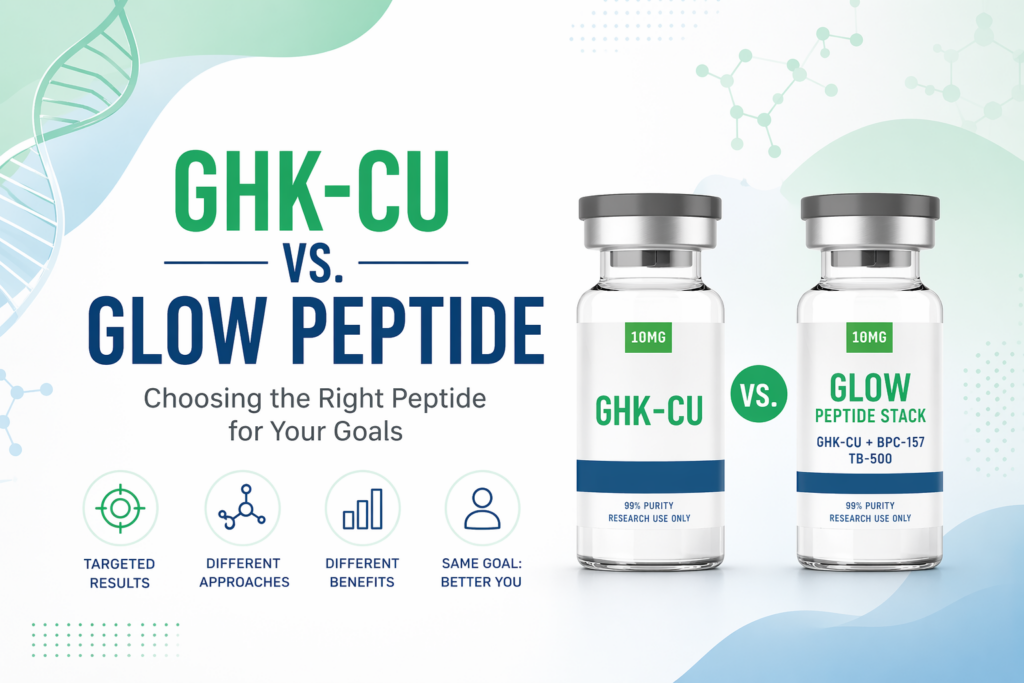

Why We Sometimes Choose GHK-Cu Over GLOW
GHK-Cu vs. GLOW Peptide — Choosing the Right Tool for the Right Outcome At Biopure Peptides, we don’t believe in “either/or.” We believe in using the right peptide—or combination—for the right goal. That’s where the conversation around GHK-Cu and the
BPC Wolverine + KPV: What This Research Stack Is Studied For
BPC “Wolverine” + KPV: What This Research Stack Is Studied For In peptide research discussions, the term “BPC Wolverine” is often used to describe BPC-157 being studied in aggressive tissue recovery models. The nickname comes from the idea of rapid
Semax vs. Adderall: What Does the Research Actually Say?
Semax vs. Adderall: What Does the Research Actually Say? In the world of cognitive performance, few comparisons spark more curiosity than Semax vs. Adderall. You’ve probably seen viral clips—like the recent TikTok circulating online—suggesting that Semax could be a “cleaner”
TB4 vs TB500: What’s the Difference Between These Two Popular Research Peptides?
TB4 vs TB500: Understanding the Differences and Similarities Between Two Popular Research Peptides At BioPure Peptides, we frequently receive questions from researchers about the differences between TB4 (Thymosin Beta-4) and TB500. Because these peptides are closely related, they are often
Peptide Blends vs Individual Stacks: Does Synergy Really Exist?
The Peptide Blend Synergy Debate: Are Blended Peptides Less Effective Than Stacks? In the peptide research community, one debate continues to surface: Are peptide blends less effective than stacking individual peptides? With the increasing popularity of blended formulations such as
What Does “Pharmaceutical Grade” Really Mean in the Peptide Industry?
What Does “Pharmaceutical Grade” Mean — And Why “Made in the USA” Matters If you’ve researched peptides, you’ve likely noticed two common things: • Many peptides are manufactured overseas• Some products claim to be “pharmaceutical grade” But not all peptides

What Is a COA and Why It Matters in Peptide Research
Learn what a Certificate of Analysis (COA) is, why COAs matter in peptide research, how to verify them, and why USA-made peptides set the standard.
Why Made in the USA Peptides Matter
Peptides require precision manufacturing and verified testing. This guide explains why USA-made peptides offer superior purity, safer handling standards, and more reliable research integrity than overseas sources.