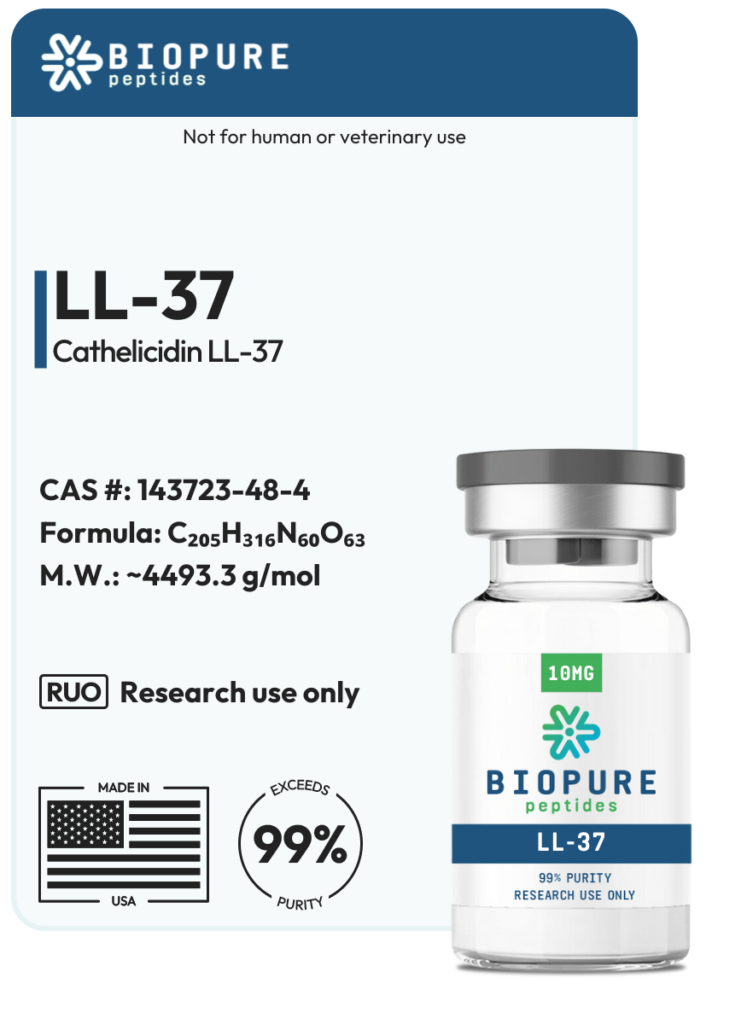
LL-37 is a synthetic peptide corresponding to the active C-terminal fragment of the human cathelicidin antimicrobial peptide (hCAP-18). It is composed of 37 amino acids and is classified as a cationic, amphipathic peptide. LL-37 is naturally expressed by epithelial cells, neutrophils, macrophages, and other immune-related cells, where it plays a role in innate immune signaling and cellular communication.
In research settings, LL-37 is widely used as a model peptide for studying host defense mechanisms, peptide–membrane interactions, immune modulation, and tissue-level signaling pathways. This product is supplied strictly for in vitro and preclinical research purposes and is not intended for human or animal use.
Chemical Information
- Peptide Name: LL-37
- Alternate Name: Cathelicidin LL-37
- CAS Number: 143723-48-4
- Molecular Formula: C₂₀₅H₃₁₆N₆₀O₆₃
- Molecular Weight: ~4493.3 g/mol
- Amino Acid Length: 37 residues
Research-Based Functional Insights
Based on findings reported in peer-reviewed scientific literature, LL-37 is frequently referenced in research involving the following areas:
Innate Immune Signaling
LL-37 is commonly studied for its role in host defense peptide signaling, including interactions with immune cell receptors and modulation of innate immune responses. Research models investigate how LL-37 influences immune cell activation, chemotaxis, and signaling cascades.
Peptide–Membrane Interaction Studies
Due to its amphipathic structure and positive charge, LL-37 is widely used in membrane biology research. Studies examine its interaction with lipid bilayers, membrane permeability effects, and peptide-induced structural changes in cellular and microbial membranes.
Immunomodulatory Pathways
LL-37 is referenced in studies exploring immune response regulation, including cytokine signaling, inflammatory mediator modulation, and cross-talk between epithelial and immune cells in controlled experimental systems.
Inflammatory Response Research
Laboratory models utilize LL-37 to investigate inflammatory signaling pathways, including its role in balancing pro- and anti-inflammatory responses within cellular environments.
Wound and Tissue Signaling Models
LL-37 is included in preclinical research examining cell migration, extracellular matrix interaction, and tissue signaling processes, particularly in epithelial and connective tissue models.
Angiogenesis and Vascular Signaling Research
Some experimental studies explore LL-37’s involvement in vascular cell signaling and angiogenic pathways in vitro and in animal models, contributing to broader research on tissue remodeling.
Biofilm and Microbial Interaction Models
LL-37 is frequently referenced in experimental microbial studies, including investigations into peptide–microbe interactions and biofilm behavior under laboratory conditions.
All referenced activities are derived from in vitro or animal-based research models only and do not imply clinical efficacy or therapeutic use.
Intended Use
This product is intended for use by qualified professionals in controlled laboratory and research environments only.
Regulatory & Compliance Statement
- For Research Use Only (RUO)
- Not for Human or Veterinary Use
- Not for Diagnostic or Therapeutic Purposes
- Not FDA Approved