Melanotan-II (MT-II) — Research-Based Peptide Benefits & Scientific Profile
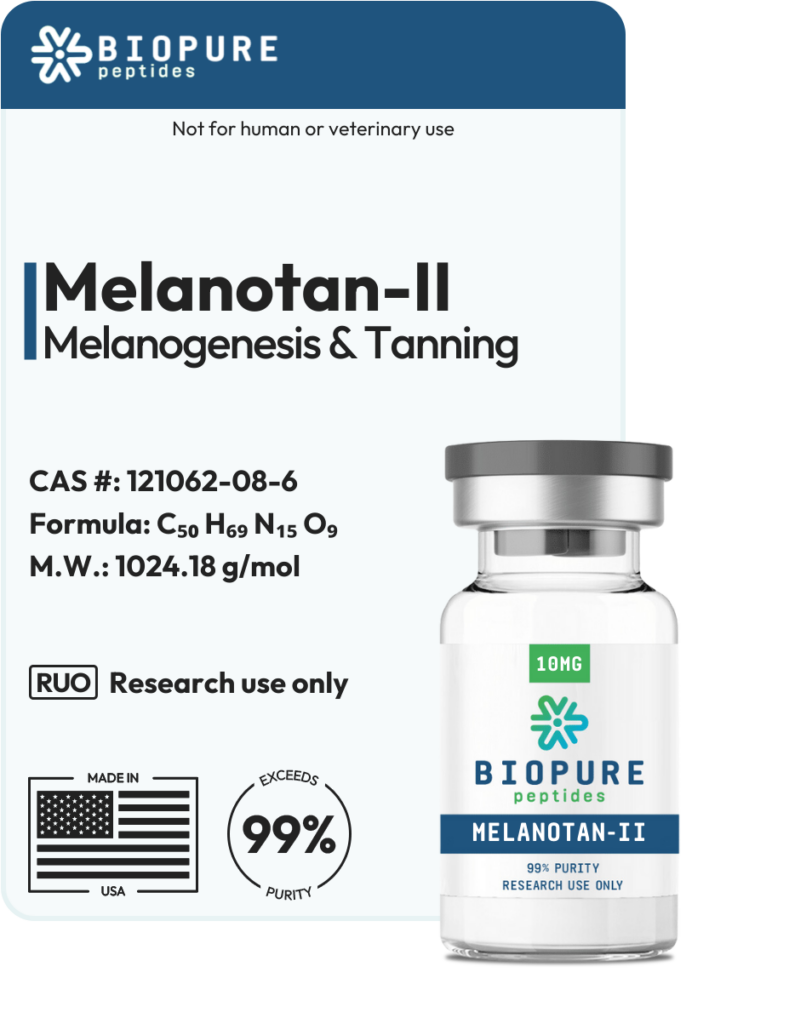
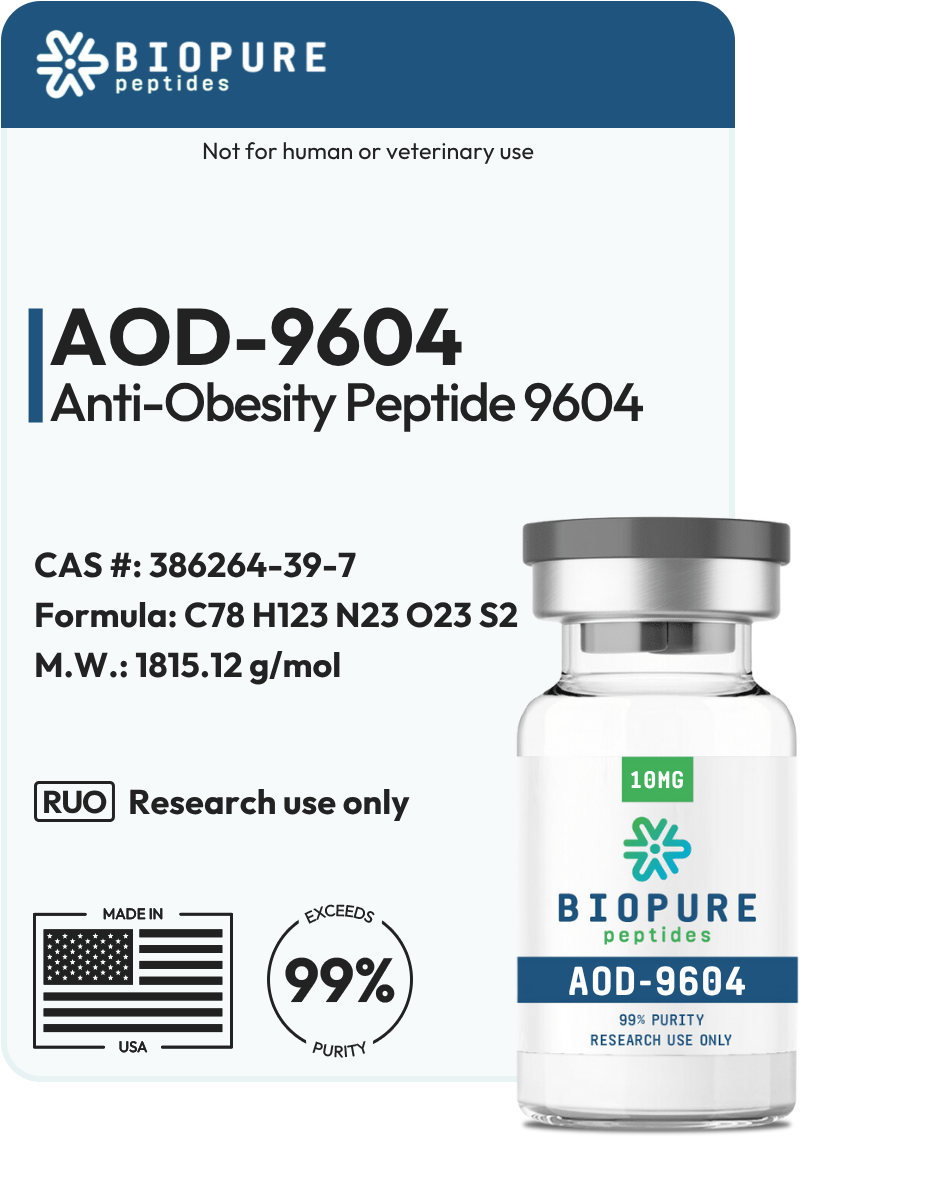
Melanotan-II (MT-II) is a synthetic cyclic heptapeptide analog of alpha-melanocytestimulating hormone (α-MSH) that has been widely used in controlled laboratory and clinical research to study melanocortin receptor biology and its effects on pigmentation, sexual function, appetite regulation, and energy homeostasis. MT-II’s structure and receptor interactions make it valuable in preclinical investigations into melanogenesis and central nervous system pathways.
Scientific & Chemical Identification
- CAS Number: 121062-08-6
- Molecular Formula: C₅₀H₆₉N₁₅O₉
- Molecular Weight (M.W.): ~1024.18 g/mol
- Amino Acid Sequence: Ac-Nle-cyclo[Asp-His-D-Phe-Arg-Trp-Lys]-NH₂
- Synonyms: Melanotan II, MT-II
Peptide Mechanism & Receptor Activity
Melanotan-II acts as a non-selective agonist at melanocortin receptors (MC1R, MC3R, MC4R, and MC5R), mimicking certain effects of endogenous α-MSH in research models. Its cyclic structure, including a lactam bridge, increases stability and affinity compared to natural peptides.
Research-Documented Effects & Benefits
- Enhanced Melanogenesis & Tanning: MT-II activates MC1R in melanocytes, increasing melanin production and leading to deeper skin pigmentation in experimental settings with or without UV exposure.
- Sexual Function Activation: Pilot Phase I clinical research showed that subcutaneous MT-II administration can trigger spontaneous erections and sexual arousal responses in normal male volunteers, correlating with central MC4R activation.
- Appetite & Energy Regulation: Agonism of MC3R and MC4R has been explored for appetite suppression and modulation of energy balance in laboratory models.
- Neuroprotective & CNS Pathways: Some preclinical studies suggest MT-II may engage central melanocortin circuits affecting cognitive function and mood, although evidence is early and primarily experimental.
Key Research Studies
- A pilot Phase I clinical trial in healthy male subjects demonstrated MT-II’s superpotent melanotropic activity, with documented autonomic effects such as somnolence, nausea, and spontaneous erections.
- Research on melanocortin signal transduction has contributed to broader understanding of MC receptor activation in pigmentation and sexual arousal mechanisms.
Important Research Context & Safety Notes
- Melanotan-II remains a research-use compound only and is not approved by the U.S. FDA or other major regulatory agencies for therapeutic, cosmetic, or consumer use. Safety concerns documented in scientific and regulatory reviews include potential side effects and systemic impacts observed in early clinical studies.
BioPure Peptides is your trusted and convenient online source for pure research peptides manufactured in the USA. We are committed to providing the highest purity products, ensuring quality and safety for all your research needs.